
Physical AI Robots Transform Factory Floors: 22% of Manufacturers Adopt by 2027

Factory floors across the United States are humming with a new kind of workforce. Physical AI robots in manufacturing are no longer a futuristic concept; they're a rapidly expanding reality, fundamentally reshaping how goods are produced. As of 2026, we're witnessing an undeniable acceleration in their adoption, driven by technological advancements, economic pressures, and a pressing need to address labor shortages. What began as specialized automation is now evolving into intelligent systems capable of adaptive, flexible operations, promising a significant uplift in efficiency and resilience for North American industries.
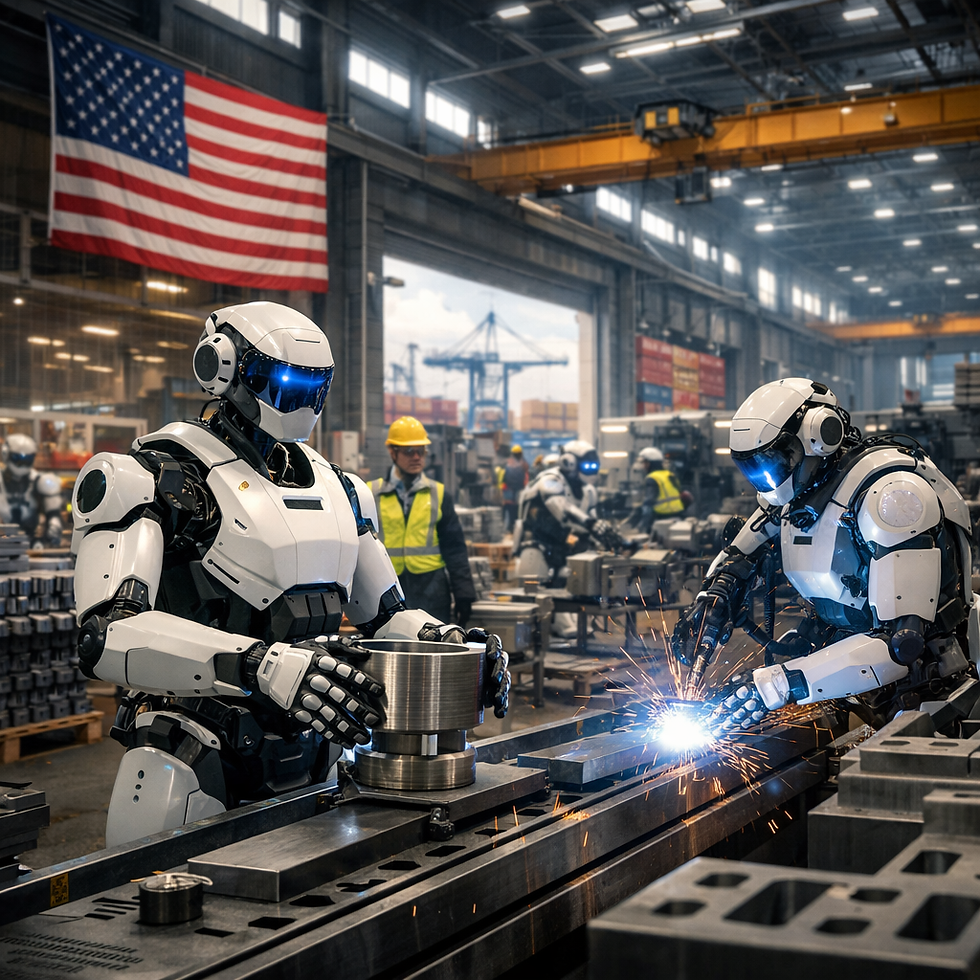
The numbers tell a compelling story. A Deloitte survey, encompassing over 3,200 global business leaders, reveals that 58% are already deploying physical AI in their manufacturing operations. This isn't just about early adopters; an astonishing 80% plan to integrate these technologies within the next two years. Among those, a significant 15% envision extensive use, and a further 3% are aiming for full integration. This isn't a slow burn; it's a full-throttle sprint towards intelligent automation, with AI-powered production lines becoming a strategic imperative for manufacturers to remain competitive.
The Rise of Humanoid Robotics: More Than Just Novelty
When we talk about physical AI, the image of humanoid robots often comes to mind, and for good reason. Their adoption rate reached 13% implementation in 2026, a notable jump from 8% just a year prior. These aren't just fascinating machines; they're proving their worth in specific, high-value applications. Their primary use cases currently revolve around flexible logistics and human-centric warehouse tasks. Think about the complexities of navigating dynamic warehouse environments, picking varied items, or collaborating safely with human workers – these are areas where the human-like form factor and advanced AI capabilities of humanoid robots offer distinct advantages.
The market for these sophisticated machines is experiencing explosive growth. While the broader industrial robotics market is projected to grow from US$24.43 billion in 2026 to US$77.36 billion by 2034, at a robust 15.5% CAGR, humanoid robotics is on an even steeper trajectory. Valued at USD 6–8 billion in 2024, forecasts predict it will skyrocket to USD 300–400+ billion by 2035. This isn't just about market size; it reflects a belief that these robots will transition from niche applications to widespread deployment, fundamentally altering how we perceive and execute manufacturing and logistics operations.
The Economics of Automation: Costs and ROI
One of the most significant factors fueling this adoption is the rapidly improving cost-effectiveness of physical AI, particularly humanoid robots. Historically, the price tag for such advanced machinery has been a barrier. However, projections indicate a dramatic drop in material costs for humanoid robots, from US$35,000 in 2025 to an estimated US$13,000–US$17,000 per unit within the next decade. This 40% decline in manufacturing costs between 2023 and 2024 alone signals a trend that will make these robots accessible to a much broader range of manufacturers, not just the largest conglomerates.
Consider the investment landscape: Vention, a company specializing in physical AI platforms, successfully raised US$110 million in January 2026. Their value proposition? Dramatically reducing automation project timelines from months to mere days. This speed and efficiency in deployment are critical for manufacturers looking to quickly adapt to market demands and realize a faster return on investment. The ability to rapidly implement and scale automation solutions transforms the financial calculus, making advanced robotics a more attractive and viable option for many.
North America's Position in the Global Robotics Race
While the Asia Pacific region currently dominates the global industrial robotics market, holding a 48.7% share in 2025 – with China alone accounting for over 80% of global humanoid robot installations that year – North American manufacturers are certainly not standing still. Early adopter sectors here mirror global trends, with warehousing and supply chain operations leading the charge. The persistent labor market pressures in these areas make automation not just an advantage, but often a necessity for maintaining operational continuity and competitiveness.
Beyond logistics, automotive manufacturing continues to be a hotbed for robotics innovation. Companies like Audi and BMW are actively piloting humanoid robots, exploring their potential for flexible assembly lines and complex tasks. Even established players like ABB Group have made strategic moves, selling their robotics division to SoftBank, signaling a recalibration of focus within the industry. We're also seeing significant interest and investment in the defense, utility, data center, and heavy-equipment industries, all seeking to enhance efficiency, safety, and reliability through advanced physical AI.
For bid managers and procurement officers looking to tap into this burgeoning market, understanding these regional dynamics is crucial. While specific North American adoption percentages for physical AI robots were not isolated in the immediate research, the overall global trends and the significant investments by U.S.-based companies and their partners indicate a robust and growing demand. TendersGo.com, with its coverage of 220+ countries and 145 languages, is an invaluable resource for identifying these opportunities, offering AI summaries, unlimited alerts, and detailed PDF viewing for tenders in this evolving sector.
Key Technologies Driving AI-Powered Factories in 2026
The physical AI revolution isn't just about the robots themselves; it's about the sophisticated technologies that empower them. In 2026, several key AI and related technologies are seeing significant adoption on factory floors:
AI – Vision (41% adoption): Primarily used for quality control, these systems detect minute defects with unparalleled precision, far exceeding human capabilities over long shifts.
AI – Large Language Models (LLMs) (35% adoption): While often associated with chatbots, LLMs are proving invaluable for knowledge management, providing technicians with instant access to complex manuals, troubleshooting guides, and operational procedures.
AI – Programming (35% adoption): This allows for software-defined automation, enabling robots to be reprogrammed and adapted to new tasks much faster and more flexibly than traditional, hard-coded systems.
Additive Manufacturing (22% adoption): Custom tooling and 3D printing capabilities mean factories can rapidly produce specialized parts and prototypes on demand, reducing lead times and costs.
Edge Computing (21% adoption): Essential for real-time control, edge computing processes data closer to the source, minimizing latency for critical robotic operations.
Cloud Computing (19% adoption): Facilitates the creation and management of digital twins, virtual replicas of physical assets that allow for simulation, optimization, and predictive maintenance.
These technologies are converging to create truly smart manufacturing environments. The partnership between Siemens and Nvidia, for example, is aiming to build an Industrial AI Operating System with the ambitious goal of creating the world's first fully AI-driven adaptive manufacturing site. This kind of collaboration highlights the industry's drive towards integrated, intelligent ecosystems where every component works in concert.
Commercial Deployments: From Labs to Logistics
The practical application of physical AI is already making waves beyond the factory floor. In the transportation sector, Waymo's robotaxi service has completed over 10 million paid rides, demonstrating the maturity and reliability of autonomous driving in urban environments. Aurora Innovation isn't far behind, having launched the first commercial self-driving truck service, regularly delivering freight between Dallas and Houston. These aren't just pilot programs; they are revenue-generating operations proving the commercial viability of advanced AI in real-world, high-stakes scenarios.
Within the robotics domain itself, Google's decision to bring its Intrinsic robotics software unit fully in-house (from Alphabet's "Other Bets") signifies a strategic consolidation and a renewed focus on industrial applications of their advanced AI capabilities. These examples illustrate a clear trend: what was once experimental is now moving into widespread commercial deployment, setting precedents for reliability and operational efficiency that will undoubtedly influence manufacturing sectors.
Overcoming the Hurdles: From Spectacle to Substance
Despite the rapid advancements, deploying physical AI at scale isn't without its challenges. The manufacturing environment demands an incredibly high reliability threshold, often requiring 99%+ uptime. Many early-stage robotics demonstrations, while impressive, operate at a 70% effectiveness level, which is simply insufficient for production lines where unplanned downtime can cost millions in lost output. This gap between 'demo-level' and 'production-ready' is a critical hurdle that developers and manufacturers are actively addressing.
The adoption friction often stems from the multi-year operational and cultural shifts required. It's not just about installing new hardware; it's about rethinking workflows, training personnel, and integrating complex systems. The transition from "spectacle to substance" is ongoing, requiring careful planning and a phased approach. However, there's good news: platforms are increasingly designed to lower these deployment barriers. Where specialized engineering teams and months of custom programming were once mandatory, new solutions aim to simplify integration, making advanced robotics more accessible to organizations without deep in-house expertise. This is where tools like TendersGo.com become essential, helping procurement teams identify vendors who offer streamlined integration and support, viewing PDFs with detailed technical specifications and comparing offerings using CPV/NAICS codes.
The "Simulate-then-Procure" Economy and Future Outlook
An emerging operational model, the "Simulate-then-Procure" economy, is gaining traction as manufacturers seek to de-risk their automation investments. This involves extensive testing within a digital twin environment before any physical hardware is procured. By validating ROI mathematically and eliminating the risk of mismatched technology in a virtual space, companies can proceed with physical investments with much greater confidence. This approach not only saves money but also significantly reduces deployment times and ensures optimal system performance from day one.
The confidence indicators are clear: the percentage of manufacturers "not planning" to implement emerging technology dropped from 21% to 17% year-over-year. This downward trend strongly suggests that staying stationary is no longer considered a viable business strategy. The imperative to innovate and adopt advanced physical AI is becoming universally recognized across the manufacturing sector. For anyone involved in procurement, project development, or exporting, this signals a massive wave of opportunity. Staying informed about upcoming projects and understanding the specific requirements of this rapidly evolving field is more critical than ever. Platforms like TendersGo.com provide the tools to do just that, offering unlimited alerts and saved searches to keep users ahead of the curve in this dynamic global market.





