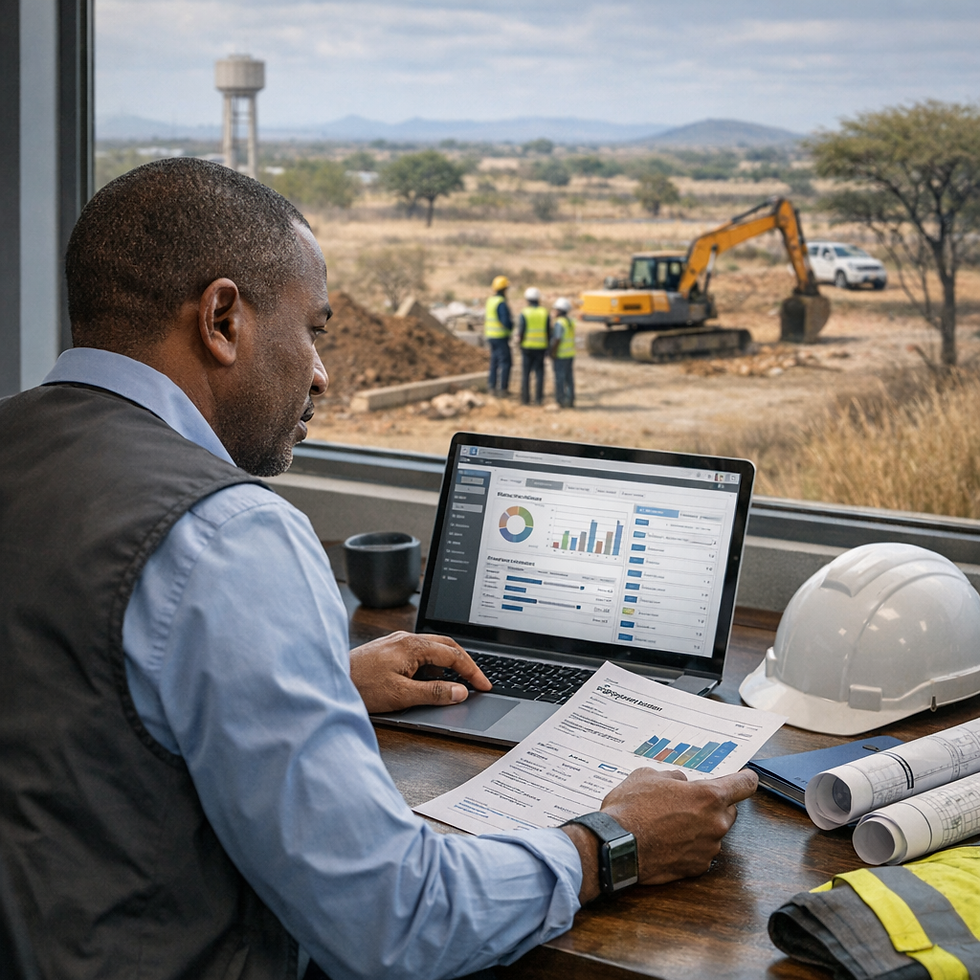
Decentralized Manufacturing Boom in India 2026

The hum of manufacturing floors across India is changing. It's no longer just the roar of massive centralized plants, but an increasingly distributed symphony, a phenomenon we're calling the decentralized manufacturing boom. By 2026, India is making a clear statement on the global industrial stage: resilience, innovation, and strategic autonomy are paramount. For bid managers, export managers, and procurement officers worldwide looking at India, understanding these decentralized manufacturing trends India 2026 is not just smart business, it's essential for competitive advantage.

India’s ambitions are anything but modest. The nation is targeting a staggering ₹87.57 lakh crore (that's over $1 trillion) in manufacturing output by fiscal year 2026. This isn't just about raw numbers; it's about a fundamental shift in how goods are produced, distributed, and consumed. We're seeing a strategic pivot, fueled by government initiatives and technological advancements, aimed at embedding resilience deep into the country's industrial fabric. This shift has profound implications for international trade and partnership opportunities.
India's Industrial Ascent: A Trillion-Dollar Vision Takes Shape
India's manufacturing sector is undergoing a rapid transformation, moving beyond its traditional role to become a global powerhouse. The Economic Survey 2025-26, tabled earlier this year, highlights that manufacturing's share of GDP stood at a healthy 16-17% in 2025, with medium and high-tech activities accounting for a significant 46.3% of the value added. This indicates a move up the value chain, away from basic production towards more sophisticated, knowledge-intensive manufacturing.
The market projections are equally compelling. From USD 0.90 trillion in 2024, the broader Indian manufacturing market is set to expand to USD 2.24 trillion by 2035, exhibiting a robust Compound Annual Growth Rate (CAGR) of 8.64%. Within this, the semiconductor market alone is expected to surge from USD 52.90 billion in 2024 to an astonishing USD 189.42 billion by 2035, with a CAGR of 12.30%. These figures paint a clear picture of an economy rapidly scaling up, driven by both domestic demand and an increasing appetite for exports.
Electronics manufacturing serves as a prime example of this growth. Over the past five years, the sector has created 1.33 million jobs, with an impressive 70% of these going to women and first-time workers. Mobile phone production alone has seen a dramatic increase, from Rs 2.2 lakh crore in FY21 to Rs 5.45 lakh crore in FY25, with exports now exceeding Rs 2 lakh crore. The country has seen an eightfold export surge in electronics over the last 11 years, aiming for $350 billion by 2030 and creating 3.5 crore jobs. This growth is not accidental; it’s the result of deliberate policy and strategic investment, making India a critical player in global supply chains, especially as companies like Apple ecosystem partners now produce over 20% of iPhones in India.
Government Catalysts: PLI, ISM, and the Push for Self-Reliance
Much of India’s manufacturing resurgence, and specifically its decentralized push, is directly attributable to proactive government policies. The Production Linked Incentive (PLI) schemes, with a total outlay of ₹1.97 lakh crore, have been instrumental. These schemes incentivize domestic manufacturing across 14 key sectors, encouraging both local and international companies to set up or expand operations in India. The Economic Survey 2025-26 widely credits PLI for boosting capacity in electronics, pharmaceuticals, chemicals, and transport.
Another monumental initiative is the India Semiconductor Mission (ISM), backed by ₹76,000 crore. This mission is designed to build a complete semiconductor ecosystem within the country, a strategic move for self-reliance amidst global supply chain uncertainties. Four new semiconductor projects have already been approved, attracting total investments of Rs 1.6 lakh crore across six states. Major players like Tata, Micron, Foxconn, and HCL are actively involved, signaling strong industry confidence. For instance, the Kaynes Semicon Sanand facility, a direct outcome of these policies, shipped its first multi-chip modules in October 2025 and is scaling to produce 6.3 million chips daily by January 2026. This rapid deployment demonstrates the immediate impact of these policies.
Beyond PLI and ISM, overarching policies like Make in India and Atmanirbhar Bharat (Self-Reliant India) provide the foundational framework. The National Infrastructure Pipeline further supports this by ensuring the necessary physical infrastructure is in place. Furthermore, the government's plan for 20 “Plug & Play Frontier Technology-enabled Industrial Parks” aims to provide ready-to-use facilities for advanced manufacturing, reducing setup times and costs for businesses looking to establish a presence. These initiatives create a compelling environment for companies to invest, innovate, and contribute to India's decentralized manufacturing vision.
The Rise of Smart, Decentralized Manufacturing Hubs
The essence of India's decentralized manufacturing boom lies in its strategic shift towards smart, tech-integrated production, particularly outside traditional industrial behemoths. We are seeing a significant movement of manufacturing activity towards Tier-II and Tier-III cities, often driven by Micro, Small, and Medium Enterprises (MSMEs). These smaller players are increasingly adopting lean and smart manufacturing practices, supported by initiatives like Startup India and Digital India. This distribution of manufacturing capacity across a wider geographical area enhances resilience and creates localized economic opportunities.
Consider the role of AI 3D printing factories India in this shift. While specific data on their 2026 prevalence wasn't available in our brief, the broader trend towards Industry 4.0 technologies certainly points to their increasing adoption. Digital twins, for instance, are being strategically utilized by major industrial players like Mahindra and Tata Motors. These virtual models allow for real-time monitoring, predictive maintenance, and optimization of production processes, reducing downtime and improving efficiency across distributed networks. Imagine a central hub managing several smaller, specialized units, each leveraging digital twins for optimal performance – that's the future taking shape.
The integration of the Industrial Internet of Things (IIoT), Artificial Intelligence (AI), and edge computing is accelerating this decentralization. These technologies enable sophisticated Manufacturing Execution Systems (MES) and predictive maintenance, critical for maintaining high uptime and efficient operations in geographically dispersed facilities. AI-powered platforms are emerging to manage micro-factory networks, using hyperlocal demand maps to identify optimal locations for production and distribution. Think of textile clusters in Punjab or leather goods in Uttar Pradesh – these regions are transforming, using data to align production precisely with market needs, fostering a more agile and responsive supply chain.
Supply Chain Resilience and Geopolitical Realities
The drive for India manufacturing supply chain resilience is not just an economic aspiration; it's a strategic imperative, particularly in light of ongoing geopolitical tensions. The Budget 2026 measures clearly target the development of supply chains that can rival those of China, reducing dependency and building self-sufficiency. The success in electronics, driven by scale and policy support, serves as a blueprint. Semiconductors, in particular, are viewed as a critical link in achieving self-reliance, insulating India from global disruptions and ensuring national security interests.
This push for resilience translates into tangible benefits for the Indian workforce. The manufacturing sector has directly created 400,000 jobs, with an additional 930,000 jobs generated in ancillary industries and logistics. This extensive job creation across various skill levels underpins the social and economic benefits of a decentralized model. By distributing production, India is not only fortifying its supply chains against external shocks but also creating employment opportunities in diverse regions, fostering balanced economic growth.
The concentration of capacity growth in states like Gujarat, Maharashtra, and Tamil Nadu for automotive, electronics, and textiles demonstrates where these policies are having the most immediate impact. These states are becoming industrial corridors, attracting significant investment and fostering ecosystems that support both large-scale and decentralized manufacturing. For global companies, understanding these regional strengths and the specific incentives offered in these areas is key to successful market entry and strategic partnerships.
Navigating the Procurement Landscape: Opportunities and Compliance
For international businesses looking to engage with India’s booming decentralized manufacturing sector, understanding the procurement landscape is crucial. While our research brief didn't detail specific e-procurement portals or tender deadlines for 2026, the general principles of Indian public procurement remain consistent and are vital for success. Government tenders, whether at the central or state level, are typically published on platforms like the Government e-Marketplace (GeM) for goods and services, and the Central Public Procurement Portal (CPPP) for larger works and procurement. These platforms are increasingly user-friendly, but require careful navigation, often in English, though local language proficiency can be an advantage in regional tenders.
Qualification requirements can vary significantly depending on the nature and scale of the tender. Generally, bidders need to demonstrate financial stability, technical capability, and relevant experience. This often involves submitting audited financial statements, company registration documents, certifications (e.g., ISO), and past performance records. For manufacturing tenders, specific requirements might include details on production capacity, quality control processes, and adherence to Indian standards. Local content requirements are also becoming more prevalent, especially under the 'Make in India' initiative, encouraging partnerships with Indian manufacturers or localizing parts of the production process.
For those seeking tenders and project opportunities, platforms like TendersGo.com are invaluable. As the world's largest tender search engine, TendersGo covers 220+ countries and 145 languages, offering AI summaries, unlimited alerts, and PDF viewing. You can filter by CPV/NAICS codes, utilize saved searches, and even explore a B2B marketplace for potential collaborators. A free 30-day trial can be a great way to explore the sheer volume of opportunities available in India's expanding manufacturing sector.
The Path Ahead: Sustainable and Resilient Factories
Looking forward, the decentralized manufacturing model in India is intrinsically linked to sustainability. While our brief didn't contain explicit data on sustainable decentralized factories India for 2026, the trends in Industry 4.0 and the broader global push for ESG (Environmental, Social, and Governance) compliance suggest this will be a significant area of development. Smaller, more localized production units inherently reduce transportation costs and carbon footprints. When combined with advanced manufacturing techniques, resource efficiency and waste reduction become core tenets.
The emphasis on robust supply chains, driven by geopolitical considerations, naturally leads to a focus on localized, sustainable practices. Companies are increasingly integrating renewable energy sources into their operations, adopting circular economy principles, and investing in green technologies. This not only meets regulatory requirements but also appeals to a growing base of environmentally conscious consumers and investors. For international partners, demonstrating a commitment to sustainability in their Indian operations will be a key differentiator.
The journey of India's decentralized manufacturing is just beginning, but its trajectory is clear. The confluence of ambitious government policies, rapid technological adoption, and a strategic focus on resilience is reshaping the industrial map. For businesses worldwide, this presents a unique opportunity to participate in a dynamic, rapidly growing market that is actively seeking global partnerships to achieve its manufacturing aspirations.